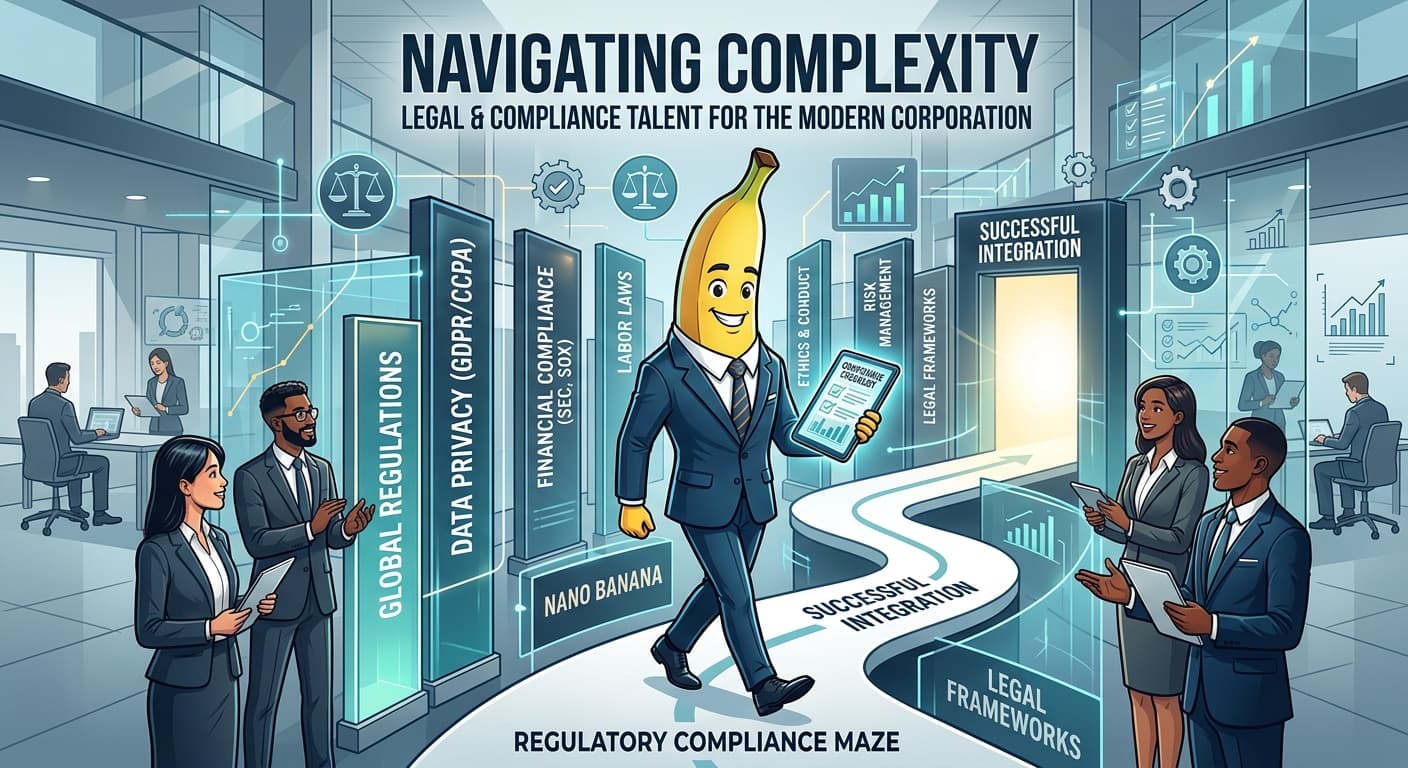
In recent years, the regulatory landscape has grown increasingly intricate. Driven by the rapid adoption of AI, shifting geopolitical realities, and heightened data privacy requirements, businesses across all sectors face a regulatory environment that is more demanding than ever. As a result, compliance hiring has transitioned from an operational necessity to a strategic imperative.
The Evolution of the Compliance Officer
Gone are the days when compliance officers merely functioned as a check-the-box safeguard against regulatory penalties. In 2026, the role of a Chief Compliance Officer (CCO) or specialized compliance counsel requires an individual who deeply understands both the legal frameworks and the underlying business technology.
Today’s top compliance professionals must navigate dynamic frameworks such as the EU AI Act, evolving SEC disclosure mandates on cybersecurity and climate risks, and fragmented global data protection laws. Consequently, businesses need professionals who aren't just legal experts, but risk strategists capable of foreseeing how new products will intersect with emerging regulations.
Key Drivers of the Compliance Hiring Surge
Several factors are driving the current demand for elite compliance talent:
- Artificial Intelligence and Automation: As companies integrate AI into their operations, they must ensure these tools don't inadvertently run afoul of discrimination, privacy, or consumer protection laws. Compliance professionals with AI governance experience are among the most sought-after candidates in the market.
- Data Privacy and Security: With the global patchwork of privacy regulations continuing to expand, companies need experts who can manage cross-border data flows, handle data breach responses, and ensure robust data governance architectures.
- Financial Regulation and Fintech: The financial sector remains heavily scrutinized, particularly concerning digital assets, anti-money laundering (AML), and know-your-customer (KYC) regulations. The demand for regulatory counsel who understand both traditional finance and decentralized frameworks is unprecedented.
- ESG Reporting: Environmental, Social, and Governance (ESG) compliance is no longer voluntary for large enterprises. Complex new reporting mandates require compliance officers to collaborate closely with supply chain, HR, and finance departments.
The Talent Shortage and Hiring Challenges
Despite the high demand, there is a distinct shortage of talent that combines deep legal expertise with the technological fluency required for modern compliance roles. This scarcity makes hiring highly competitive. Traditional recruitment strategies—relying solely on job boards or generic search firms—often fail to yield candidates with the nuanced skill sets needed for these hybrid roles.
Moreover, the best candidates are often passively employed. They require compelling reasons to move, such as a strong organizational commitment to compliance, a direct line to the board, and the necessary budget to build effective compliance infrastructure.
How Organizations Can Adapt
To successfully attract and retain top compliance talent in this environment, organizations must rethink their approach:
- Elevate the Role: Ensure the compliance function is viewed as a strategic partner to the business rather than a roadblock. Compliance leaders should have a seat at the executive table.
- Embrace Flexibility: Consider hybrid or remote work arrangements to expand the talent pool beyond your immediate geographic area.
- Invest in Continuous Learning: Given the rapid pace of regulatory change, provide your compliance team with the resources to stay ahead of the curve through continuous education and professional development.
- Partner with Specialized Recruiters: Working with a recruitment firm that understands the nuances of the legal and compliance sectors can provide access to passive candidate networks that are otherwise unreachable.
Conclusion
As the regulatory environment continues to evolve, the strength of a company’s compliance function will increasingly become a competitive differentiator. Organizations that invest in top-tier compliance talent will not only mitigate risk but also gain the agility to innovate securely within complex legal frameworks.
At FavHire Consulting, we specialize in identifying and placing the forward-thinking compliance and regulatory counsel your organization needs to thrive in 2026 and beyond. If you are looking to build or expand your compliance team, we are here to help.